

Back to my body
& the poetics of dance

“Unless this center has been found, you’re torn apart. Tension comes.”
— Joseph Campbell, on dance
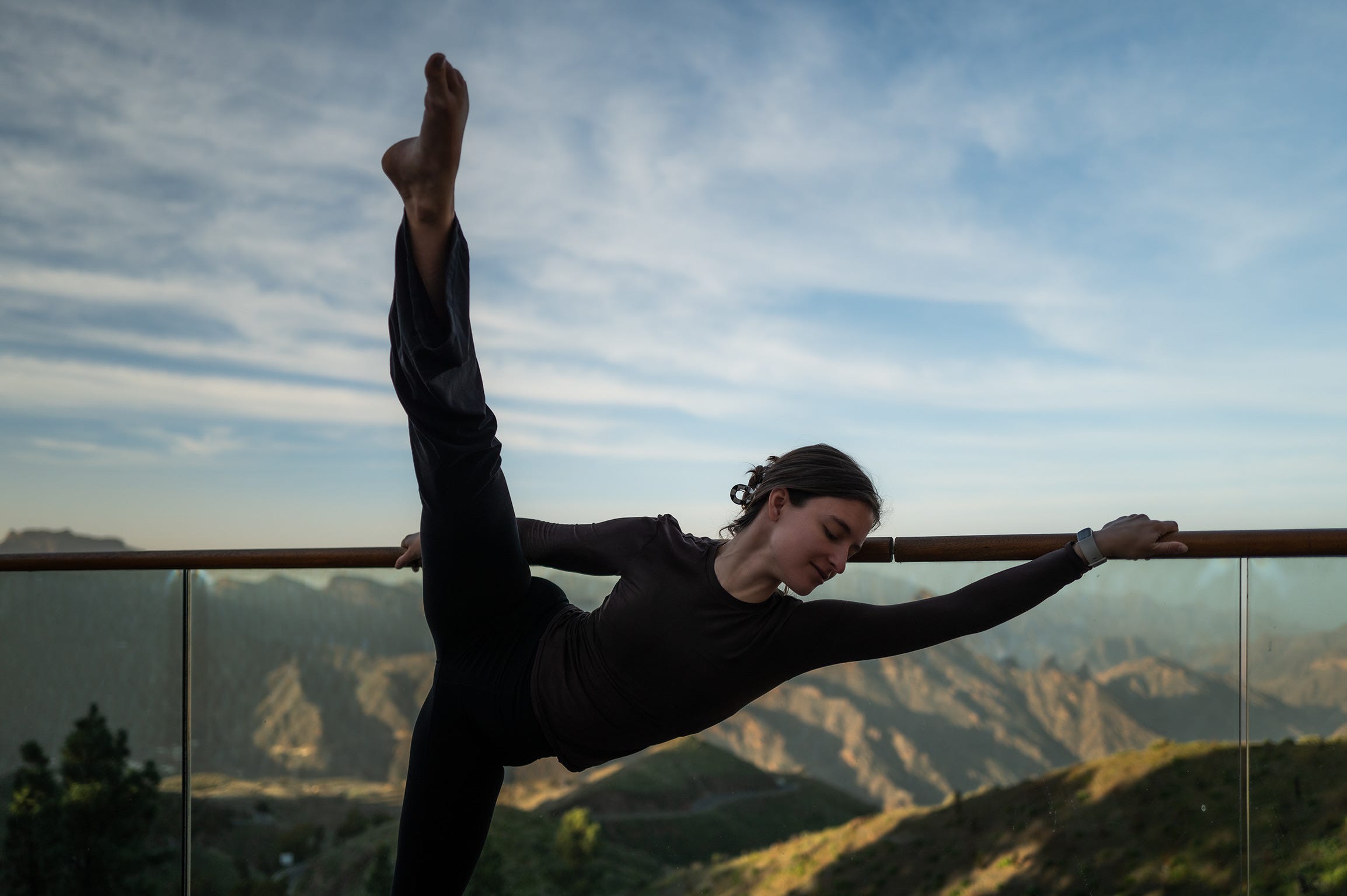
I wouldn’t have gone if I’d known I’d be the only student.
Or if I’d known the studio was accessed through an unmarked nail salon, in a part of Cape Town I’d been told not to visit alone.
The instructor asked if I had questions, and I said no. A lie. My mind didn’t know the choreography, but I suspected my body did. And when the music came on, I began to move, trance-like.
Such was the case a week earlier, in the studio accessed through the bowels of the arts center where the Cape Town Opera plays. And such is often the case with dance, no matter how foreign the place.
I’ve learned the body has its own familiar knowing. It remembers things it wasn’t taught—even things the mind tries to forget.
I started dance not long after learning how to walk. By ten, I’d joined a company and was taking fourteen classes a week.
In my earliest memory, I’m five years old, sitting with legs outstretched and flexing my feet so hard, my heels come off the ground.
“Do you see that, girls?” the studio owner says. “That’s what all of you should look like.”
In that moment, I became her disciple. I would do anything for her admiration. Little did I know I had hyperextended knees, so it was less a skill and more an anatomical inevitability.
In fact, most of my joints were hyper-mobile. I was structurally vulnerable, unstable; primed, in a way, to bend to any will—especially hers. My body had no sense of resistance.
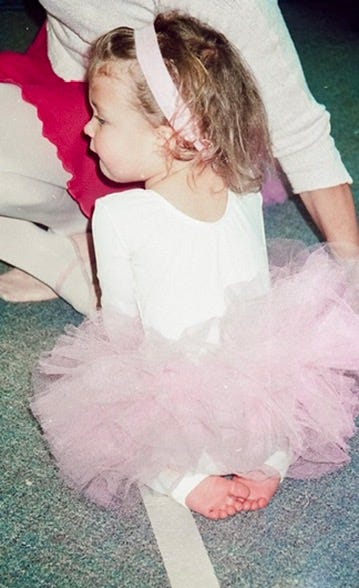
At that age, I often felt the weight of things before I could make sense of them. I once told my parents: “Something’s bothering me about today, but I don’t know what.” It turned out the milk was expiring.
I believed dance could help with the sense-making, but I didn’t yet have the patience to wait for revelation.
My first solo was to Five for Fighting’s “The Riddle,” building to the line:
Here’s a riddle for you. Find the answer.
There’s a reason for the world, you and I.
It was choreographed by the company’s teenage prodigy who was (to me) a god. After teaching me the first 8-count, she paused for questions.
“Yes,” I said. “What do you think is the reason for the world?”
I was far from the first to use dance for meaning-making. Walter Benjamin mentions in an essay how ancient people once danced to mimic the planets in the sky—a kind of knowing through doing.
As language evolved, our mimetic faculty migrated into words and out of the body. Instead of connecting to the cosmos through movement, we connected through metaphor.
I suspect, as he does, that we lost something critical in translation.
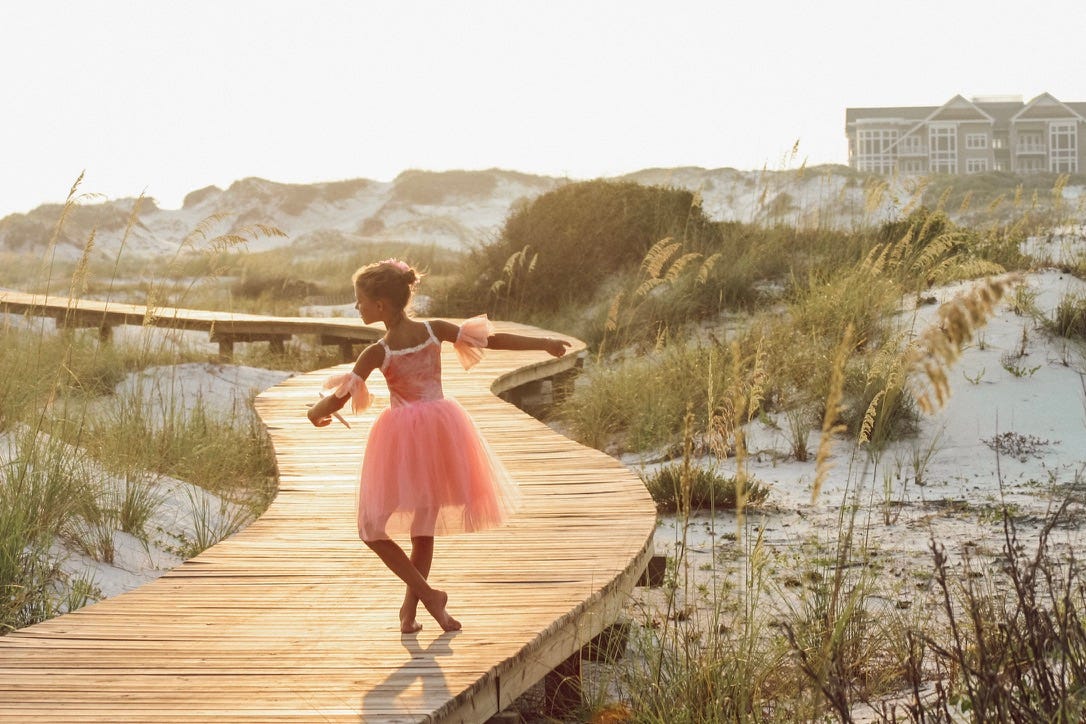
It’s hard to say whether the studio owner also believed in dance as revelation. But at the very least, she gave it the reverence it deserved.
And she was an artist. She’d written a play for our company that became so popular, my own elementary school took a field trip to see it.
Now, her daughter was starring in Cats on Broadway. Several students were Radio City Rockettes. She’d had a dream for us, a dream I suspect she never got to dream for herself.
But I never asked myself if I wanted that dream. Instead, I assembled a binder on the history of Broadway. I tape-recorded rehearsals to listen back at home.
I decided the dream was about discipline. The body is deviant: the shoulders slouch when unattended; the feet roll in instead of maintaining turnout. You have to teach the body how to behave.
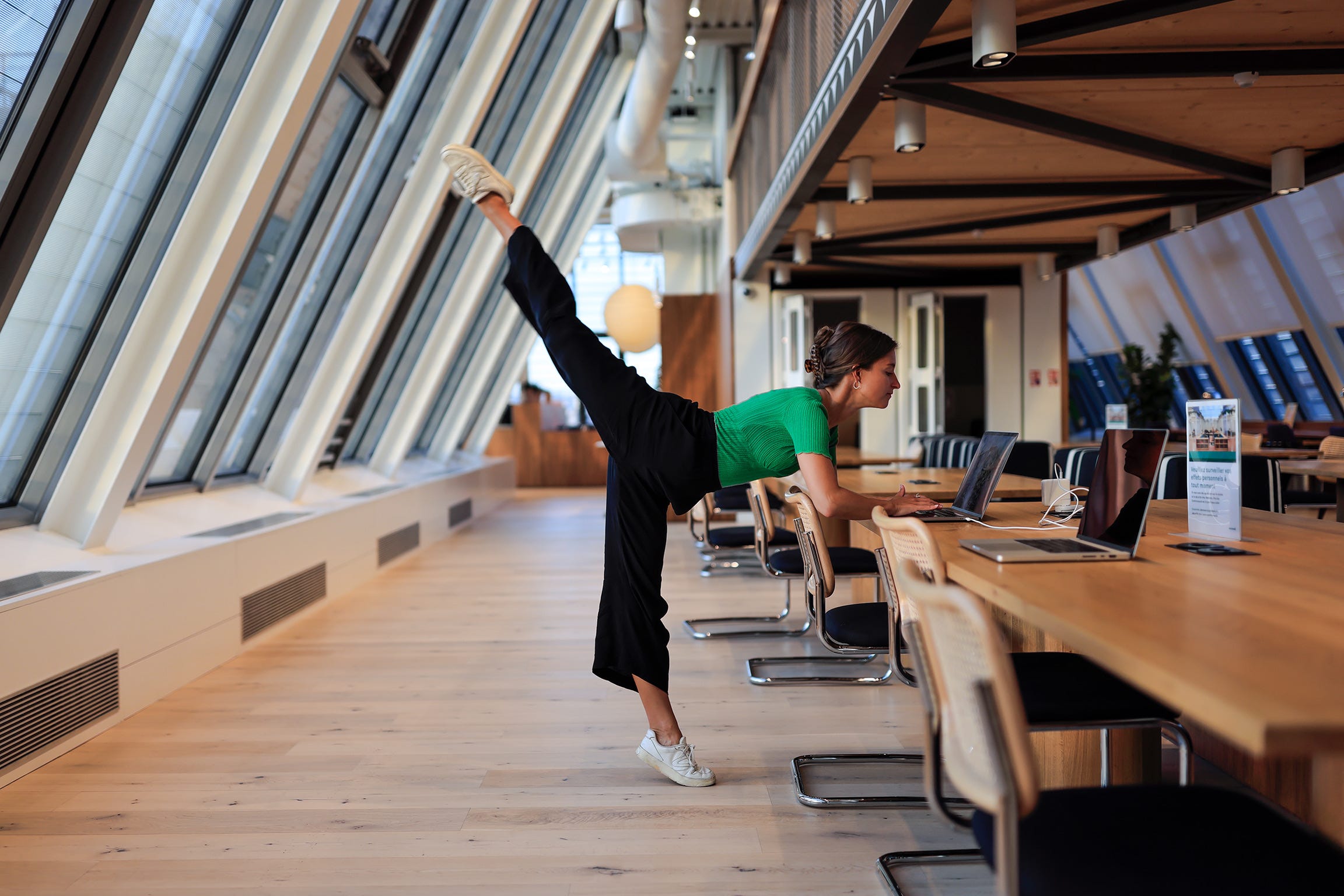
The studio owner started every tap class the same: no words, just a demonstrated step. We’d go down the line, each attempting it. Get it right, you step forward. Get it wrong, you step back. The whole class was a fight against demotion.
Luckily, tap came naturally to me. There was something about the rhythmic quality, the way it worked in patterns and repetition.
Outside class, I was forming my own rituals of repetition. Anytime I made a full rotation in one direction, I’d spin back the other way to even it out. In the swimming pool, I’d tap the bottom once with my right foot, twice with my left, then once with my right again.
I told myself this was part of my training; it’s important to never have a dominant side. But I know now it was a way to manage anxiety. Symmetry gave me something to control.
Then once when I was about fifteen, the studio owner interrupted our ballet class, a string of five-year-olds trailing behind her like ducklings. I knew each by name, as I taught them once a week.
Her eyes narrowed in on my pointe shoes, asking why they weren’t black like everyone else’s. I answered, though I suspected it wasn’t a question.
“They didn’t make them in my size, so I had to have a pair dyed. They’ll be ready next week.”
This didn’t satisfy her, and she raised her voice. Everything I remember from that moment has to do with the body: the heat rising on my cheeks, the feeling that my intestines might slip out between my legs.
Distantly, I heard her calling me a perfectionist who always had to be right. My vision blurred with tears, but I kept staring at the floor, knowing if I looked up, I’d see all those little eyes.
“And this is the other problem with you,” she said. “You’re too sensitive. I can’t have you welling up in tears every time I give you a correction.”
The ballet teacher tried to come to my defense, but she turned her anger to him. “Are you chewing gum in the studio?”
She crossed the room and held out her hand, requiring him to spit directly into it. The trash can was not three feet away.
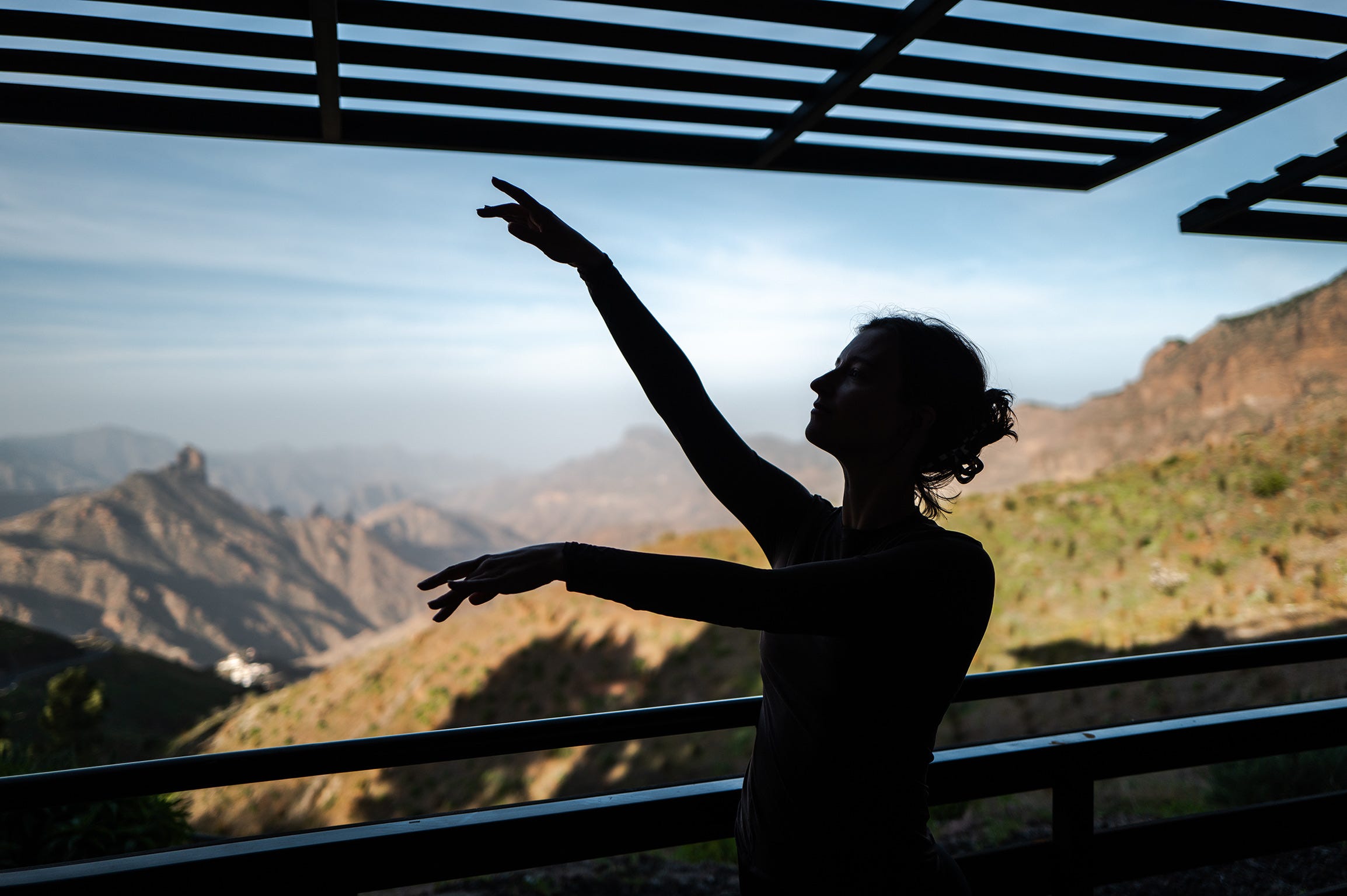
Not long after, the recurring nightmares began. Each was some variation of finding myself on stage, having never learned the choreography. I tried to mimic those around me, but I couldn’t keep up. It wasn’t in my body.
I started to write more poetry. Like dance, I would sometimes slip into writing in a trance state, emerging with a poem I hardly recognized as my own. It was another way of telling myself something I didn’t fully know yet.
That month, I wrote:
numbness is feeling
comprised of the absence of feeling
you’ll know it yourself
when you don’t know yourself anymoreforgetting the hurt
but too, with it, forgetting the healing
forgetting to cry
or to miss who you were once beforenumb is assigning
your mind as a slave to your body
and seeking somebody
to look at you yet with the mindof signing your name
to a list that is labeled ‘the naughty’
so when you forget it
at least it’s somewhere you can findnumb’s introducing
yourself to the face in the mirror
forgetting the hint
at the pain that your two eyes hidthat you know her not
it cannot be any clearer
numbness is doubting
you ever truly did
But once a week, there was a reprieve: a contemporary class with a new instructor in her mid-twenties. She had grown up in the studio too.
In her class, I found that dance could be the release of a pressure valve—a way to express emotions that couldn’t find their way into words. There was no teaching the body to obey, only giving it permission.
Eventually, I confided in her that I was thinking of leaving. She gave me a knowing nod.
A few times that summer, she invited me to take her class in secret, on days the studio owner wasn’t around. In the last one, she taught a dance to a song that said, “Leave. Free yourself. Let go of my hand.”
I started at a new studio, owned by a gay couple with an insatiable love for the color purple. Purple walls, purple bags, purple jackets. On my first day, we did a combination to a Rihanna song. She sang, “I want you to stay.” And I did.
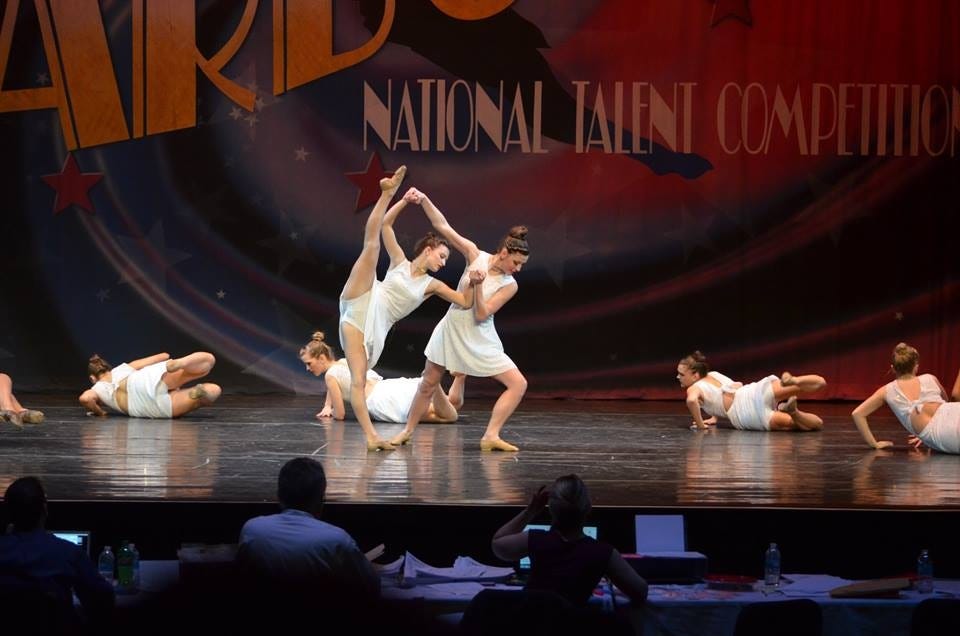
The studio competed all across the southeast, so we weren’t just a company; we were a team. Once, when we did a combination to a particularly emotional song, one girl started to cry. I remember my discomfort, thinking how embarrassing it was for her to be “welling up in tears.” But the studio owner didn’t say that. He walked over and embraced her. The other girls did too.
A few years later, I made the dance team at my state’s university, and dance became more sport than art. We were a part of athletics, with physical trainers and sponsored Nike gear and annual EKGs. I returned to the world of precision and discipline.
And I was in my head again. It would take me almost a decade to learn to identify this feeling and text a friend, on occasion: “Feeling like a head on a stick today.”
But every Tuesday night, I’d drive to the parking deck on the edge of campus. There, a group of us would swing dance around a speaker. We didn’t know the basics; we improvised. We danced until the cops made us go home.
When I graduated, I hung up my dancing shoes and moved to Atlanta. The change, coupled with my first heartbreak, made for a hard transition. I was living alone for the first time, and I didn’t know where I was headed. But sometimes movement precedes the knowing. Sometimes you move your way into the answer.
So I established a new ritual: on days I felt off, I’d put on music and dance until I started to cry. It became a way back into myself.
Eventually, I’d dance on the good days too. With the cat. In the kitchen while cooking. I started taking classes again. Once, we danced to a song that said, “I’m good without you.” And I realized, I was.
A few years later, my friend and I started a poetry group. Somehow, it became a group to go out dancing too. My two ways of sense-making, it turned out, were siblings; poetry is language at its most embodied, and dance is embodiment beyond language.
My friend Micah and I developed a bit where we’d pretend to have Socratic debates on the dance floor. As the crowd sang “Baby it’s you, you’re the one I love,” we’d shout something like “—PRESUPPOSING A STABLE CONCEPTION OF THE SELF HERE—” while shimmying our shoulders carelessly.
I learned dance and poetry could both be places to expand the surfaces of the self. I am not the speaker of the poem, nor am I the character in the dance. But there is always something of myself in each of them. I become them to understand them.
I started exploring other kinds of movement too. Rock climbing, acroyoga, surfing. I saw each as a dance—a coordination between my body and some resistant force.
But I always found my way back to the studio. I’ve now taken classes on five different continents.
In these classes, my body occasionally returns to the tension it learned young. But I remind myself the dream is not about discipline anymore; it’s about revelation. There’s a reason for the world, you and I.
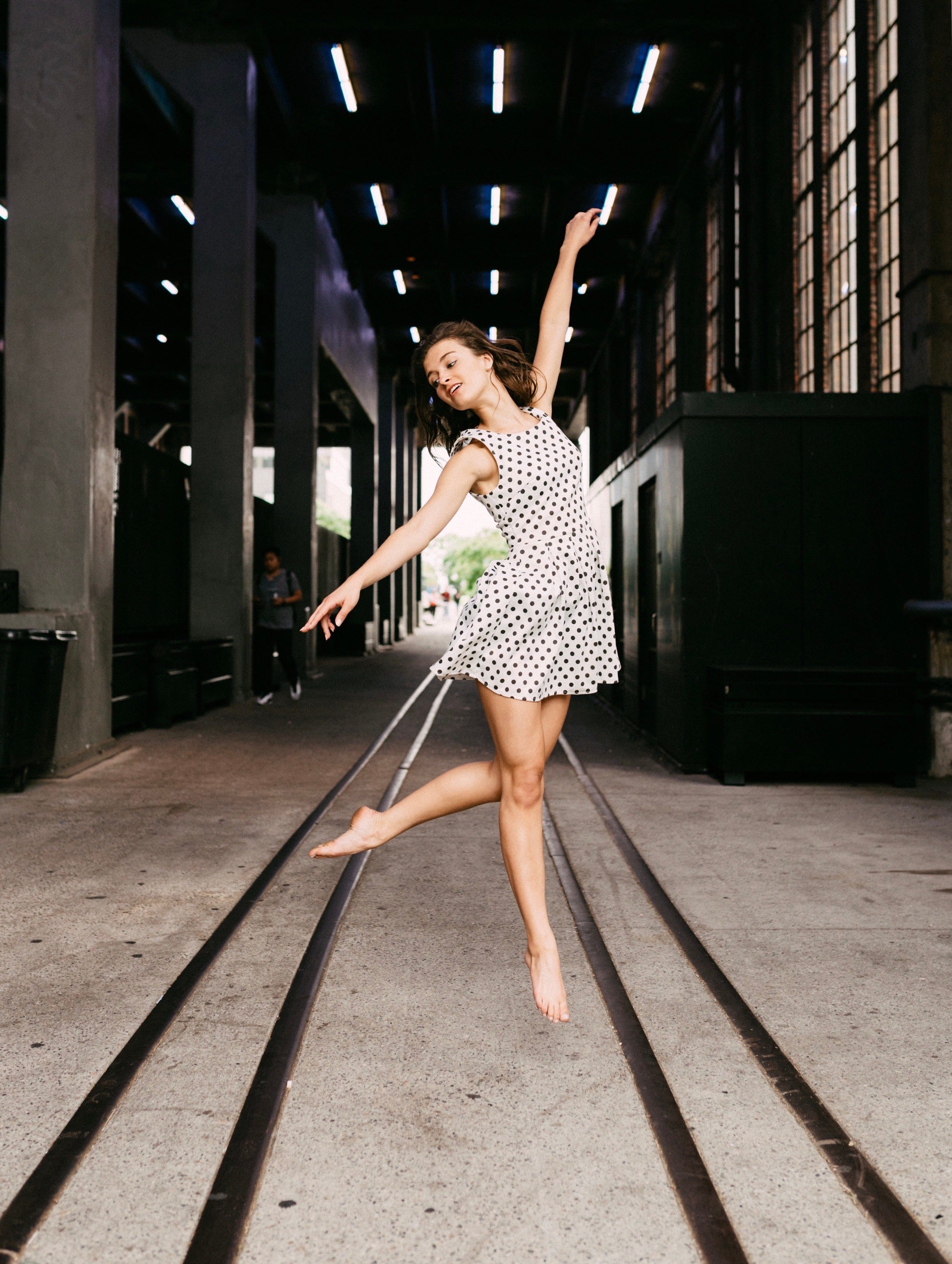
Last year, I started having a new recurring dream.
In it, I’m doing a pirouette. But I don’t lose momentum after a few rotations; I keep turning. Five, six, seven rotations. Sometimes I get as high as seventeen.
I don’t get dizzy or disoriented. I don’t spin back the other direction in order to “balance it out.”
I hear the distant voices of my friends, but mostly, I hear my own voice clearly. It tells me I’m on center. It tells me I can keep turning forever.
What a gorgeous revelation- "I learned dance and poetry could both be places to expand the surfaces of the self. I am not the speaker of the poem, nor am I the character in the dance. But there is always something of myself in each of them. I become them to understand them." -- woosh, to think that the things we create could also be our own teachers..
I love watching you dance, and I love watching baby emma dance!! I can tell she knows something that'll take me a whole life to articulate.. :')
Love this, Emma!